U.S. Route 66. Established in 1926, it created the first direct connection between Chicago and Los Angeles. Running for over 2,400 miles, drivers would cross through eight states if they drove from end to end. John Steinbeck called Route 66 “The Mother Road,” and it features prominently in his book The Grapes of Wrath as the path through which many migrants sought to escape the Dust Bowl. Before interstate highways, Route 66 took travelers through numerous cities and towns, each competing to offer their own lodgings, food, and entertainment. Thanks to the Pixar movie Cars, Route 66 will continue to live on in the memories of future generations as well (via Route 66 The Mother Road).
Route 66 was decommissioned as a national highway in 1985, but a joint effort between states and the federal government has created the Historic Route 66 National Scenic Byway, which has preserved approximately 1,400 miles of the original route. On the scenic byway modern drivers can experience what Route 66 once was, as it passes through small towns, offers up countless roadside attractions, and preserves history in a way that no textbook ever could.
So come along, then, as we detour to the town of Pontiac, Illinois during our Summer 2026 road trip to learn more about The Main Street of America.
Let’s begin:
The Route to Route 66
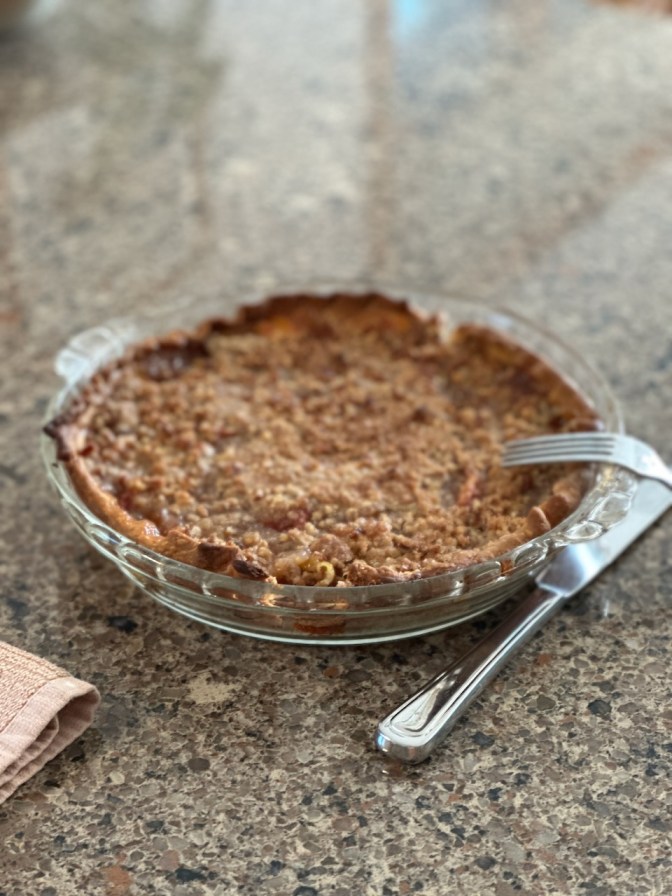
After a fun week in the Twin Cities region visiting with family and friends, we began our journey home to New Jersey. This would be no speed run back to the East Coast, however. We planned to break up our trip across several days and explore. First, I want to share a little bit of our week in eastern Minnesota and western Wisconsin.Minnesota would mark the furthest west we would travel on this journey.One of the highlights was a visit to Brasa Premium Rotisserie. Brasa is quite popular in the Twin Cities, and my family wanted me to experience it for myself.Brasa’s menu blends flavors and recipes from the Caribbean, Mexico, and the southern United States.Tortilla chips appetizer with an amazing guacamole and maybe one of the best red salsas I’ve ever tried? Yes please!The meal was simply fantastic. Our main entrees were rotisserie chicken (lovely) and fried catfish coated in cornmeal (divine). Our sides were just as amazing – wonderful yucca fries, a tasty salad, and my personal favorite of rice and pigeon peas. I would absolutely, completely recommend Brasa to anyone visiting the Twin Cities area.On the way home from dinner, we were treated to a pretty view of the Minneapolis skyline along I-94.Of course, I made time to treat myself to a latte (or two or three) from Caribou Coffee, one of my favorite coffee chains.While not as glorious as Brasa, I did make sure to grab lunch at Taco John’s, my favorite Midwest taco chain.It’s rare (although not unheard-of) for me to feature a wine or liquor store in this blog. However, I’d like to bring your attention to Casanova Liquors in Hudson, Wisconsin for one cool reason…The liquor store is carved into the side of one of the bluffs that overlook the St. Croix River. Originally a brewery, Casanova has been in existence since 1871.Speaking of old homes, I also made time to finally visit The Octagon House, a frontier-era home in Hudson, Wisconsin.The home was originally built in 1855 by John S. Moffat. An attorney by trade, Moffat moved to western Wisconsin from New York and eventually became a judge. Tours are offered every Friday, Saturday, and Sunday during summer months and begin in the carriage house, which now serves as the visitors center and gift shop.I arrived after lunchtime and had the pleasure of being the only visitor on site – I had my own personal tour! We started in the parlor – the center of any Victorian home, where the family would entertain guests. Although well-appointed, the Moffat family’s home was not ostentatious. Much of their money was given to charitable organizations.A few artifacts of the 19th century caught my eye, such as this stereoscope. The device used two photos to make images appear three-dimensional to viewers. It was quite the rage during the Victorian era.The home also featured an early Edison phonograph. Before the flat, disc-shaped records that are still in use today, recordings were made on wax cylinders.The John S. Moffat House is operated by the Hudson Area History Connection, which works to tell the story of the Hudson area.Octagonal homes were popular in the 19th century due to the influence of Orson Fowler, a phrenologist (a pseudoscience that believes you can understand someone’s personality based on the shape of their skull) and amateur architect. His philosophy was that an octagonal home would offer better light and ventilation than a traditionally-shaped square or rectangular house. While the fad did not stick, surviving examples of octagonal homes are certainly interesting to look at.The Moffat family would often entertain guests with dinner parties, but do not expect to see wine or beer on the table. The Moffats were teetotal – they believed in abstaining from alcohol. They also believed in womens’ suffrage (the right to vote) and the abolition of slavery. I learned from my tour guide that in the 19th century, if you believed in one of these, you most likely believed in all three.My favorite room was the kitchen, where the family’s meals were prepared. According to the tour guide, it was also where the family would bathe before the house had indoor plumbing, as water could be heated in the hearth and poured into the metal bathtub.My tour was informative, and the guide was friendly and knowledgable. If you’re in the Hudson area, I’d definitely recommend a visit!To celebrate our visit, our relative made us a peach pie (with fresh peaches!). It was a lovely treat, and you better believe I took some for the road!After a fun week, it was time to pack up the Acura and get on the road once again. For being a midsize sedan, the TLX continues to impress me with how much cargo it can swallow with ease.
Day 1 – Minneapolis, MN to Rochelle, IL
We departed the Twin Cities area after breakfast on July 4th and began to wind our way back to New Jersey. Storm clouds on the horizon threatened severe weather yet we never encountered more than a stray drop or two of rain. It would become the theme of our drive home – despite storms roiling much of the eastern United States, we never encountered more than a passing shower.Did you know that there is a National Mustard Museum? Neither did I, until my wife discovered it in Middleton, Wisconsin, a suburb of Madison.Seven days a week, from 10:00 am – 5:00 pm, you can visit for free and learn more about mustard than you’ve ever known before. Over 6,000 different mustards from 50 states and 70 countries can be found in the museum.Before mustard came in ready-to-serve containers, prepared mustard would be placed into a mustard pot. Very posh, if you ask me.The mustard-themed puns were endless. My favorite? Mustard Piece Theater.I had to mustard all my courage to include a goofy photo of myself in this blog post!The museum has a collection of antique mustards on display. I learned that yellow American mustard was historically known as “salad cream mustard,” and it was often used in recipes for potato salads and in salad dressings.Want to impress your friends with some mustard knowledge? True dijon mustard comes from seeds only grown in the Burgundy region of France. Unlike champagne, which can only be produced in the Champagne region, in 1937 a French court ruled that dijon mustard referred to the recipe, not the seeds, and lost its protected status (via Wikipedia).The museum is free, but has numerous mustards (and mustard-themed products) for sale. We grabbed a jar of Lowensenf extra hot mustard, our secret ingredient when we make sandwiches. We also made the mistake of doing a tasting at the “Mustard Bar,” and ended up walking out with about $50 worth or purchases. So much for our free visit!About ninety minutes after departing the Mustard Museum, we crossed into Illinois!We found a hotel in Rochelle, Illinois as well as a local restaurant for dinner. After checking into our hotel we made a quick detour to the Rochelle Railroad Park for a unique bit of railroad history.Two active railroads pass through the park, intersecting at the unique “double diamond” crossing. Up to 80 trains go through Rochelle each day.We had been in the park for barely a minute when two different freight trains passed by. It was quite the show! The park is also prime viewing for railroad aficionados, and offers a gazebo with ample seating and picnic tables for visitors. When we visited, at least a dozen other people were watching the trains as well.A small Whitcomb switching locomotive, designed to move train cars over short distances, is on display. By the time we arrived the Visitor Center was closed, but if I was in the area, I’d definitely stop back!Being as it was July 4th, we were a bit limited in dinner options. Fortunately, Flight Deck, a bar and grill located at the Rochelle Municipal Airport, was open.We also discovered that the airport is home to an active skydiving school! As we sat at a table on the restaurant’s patio, we saw skydivers lining up to board a plane.Dinner was excellent! We shared a salad and then each ordered wraps. My wife had a chicken caesar wrap on a gluten-free tortilla, while I thoroughly enjoyed my buffalo chicken wrap (the fries were excellent, too!).As we were enjoying our dinner we felt a rush of air and heard a “whoosh” sound… the skydivers flew only a few yards over our heads as they came in for a landing!Talk about dinner and a show! It certainly made for a memorable evening.After dinner, we decided to treat ourselves to a little ice cream at Royal Scoop.We knew there would be ice cream, but we had no idea there would be a retro video game arcade as well!Ice cream and 80’s video games… it’s like someone designed the perfect dessert spot for me!Games are great, but we were there for ice cream and Royal Scoop did not disappoint! While my wife had a delicious Kiwi sorbet, I positively devoured a cup of Makinac Island Fudge ice cream!You can keep your fireworks, concerts, and parades. I celebrated America’s 250th birthday with some of the best ice cream I’ve ever tried.After a long day of driving, it felt good to check into our hotel and relax. The next day promised to be just as busy!
Day 2 – New Rochelle, Illinois to Route 66
The next morning we were up early and on the road toward the town of Pontiac, Illinois, where I would finally get to drive on the legendary US Route 66.Pontiac has several murals dedicated to the history of Route 66. The most famous one is a two-story tall mural of the Route 66 shield. I had planned to get a photo of my car in front of the shield, but upon arrival we discovered that the parking lot in front of the mural was closed for renovations. It was… disappointing.My disappointment was short-lived, however when I found another mural just around the block. This one would become even more special as the day went on, as it features artist Bob Waldmire. More on him in a minute.Our next stop was to the Route 66 Hall of Fame and Museum. Open seven days a week, the museum is free to visit (although donations are welcomed).Although small, the museum had an extensive collection of memorabilia for Route 66’s path through Illinois.The fast food chain Steak and Shake started along Route 66 in the town of Normal, Illinois. A booth from that restaurant is proudly displayed.Behind the vintage gas pump is a Volkswagen Microbus owned by artist and Route 66 historian Bob Waldmire. Bob lived out of this van for 18 years as he criss-crossed Route 66 time and time again. If you have seen the Pixar movie Cars, the character of Fillmore is based off Bob and his van.Bob Waldmire was Route 66’s foremost historian. His maps and drawings captured the towns, landscapes, and peoples who inhabited The Mother Road. His van’s interior is a filled with Route 66 mementos.On the second level, a small gallery preserves some of Waldmire’s works. The museum was a lot of fun (and I spent quite a bit of money in the gift shop!), but it was now time to drive The Main Street of America.Before leaving Pontiac, I grabbed one more “car selfie” in front of another cool mural.This mechanic’s shop in Pontiac could have been from 1950 as easily as 2026.Here we go! I was finally driving on US Route 66. Unlike modern interstate highways, Route 66 was cobbled together by linking already-existing roads. The condition of those early roads were… variable. For instance, when the road opened in 1926, only 800 miles of its 2,400 total length were paved.The original 1926 version of US Route 66 was quickly found to be suboptimal. In many places it was extremely narrow, leading to numerous accidents and fatalities. In Illinois, you can still find traces of the original Route 66, decaying next to its 1940s-1950s alignment.A stretch of the original Route 66 is preserved in Chenoa, Illinois, open for pedestrians and bikers.It was pretty awesome to roll a milestone while driving Route 66.Lexington, Illinois has preserved a one-mile stretch of the original 1926 alignment of Route 66 that can still be driven on today. Memory Lane is a time machine, offering you a glimpse of this historic road at its beginning.Driving this original stretch of Route 66 was absolutely awesome. It’s one of my highlights from our road trip this summer.Route 66 continues to gain new attractions as well. “Crazy President Elephant” was a statue created from used car parts by artist Kasey Wells. He built the elephant as part of his own campaign for US President in 2020, as he towed it on a trailer behind his pickup truck. He actually made it on to the ballot in 37 states! His quixotic attempt at winning the 2020 election was unsuccessful, but his statue lives on in Illinois (via Roadside America).After several miles cruising along Route 66, we pointed the car toward Ohio and our next major destination. We stopped at Mad Goat Coffee in Danville, Illinois for a fuel-up. Established in an old car dealership, Mad Goat not only serves coffee and baked goods, but also roasts their own coffee beans.We ordered a couple of iced lattes to go, and pointed the Acura toward Ohio. To be continued…
Wrapping Up
States: Minnesota, Wisconsin, Illinois
Total mileage: 593
Trip time: 28 hours
Driving US Route 66 was one of the coolest experiences I have had behind the wheel. It’s one thing to have read about Route 66, to have watched documentaries, and to have looked at old photos. It’s another thing entirely to have driven my own car down it, including on one of the oldest remaining sections. Add to the trip a mustard museum, a cool train experience, and a dinner with skydivers, and the first stint of our drive home was beyond memorable.
Stay tuned for our next chapter as we make a return to an Ohio city to complete a very special scavenger hunt! And thanks for coming along on another journey down the open road ahead.